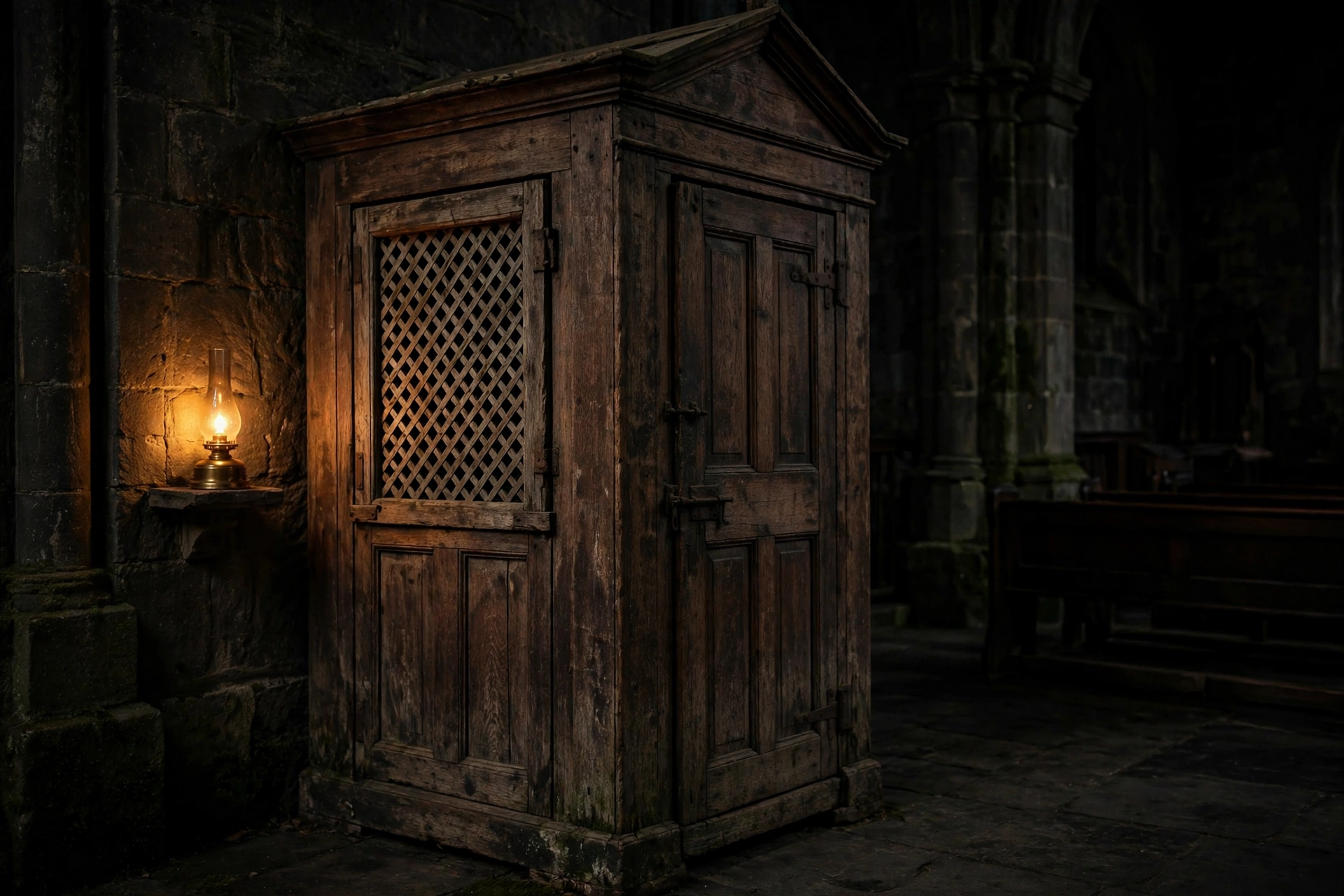
32. What is the Sacrament of Penance? The Sacrament of Penance is the sacrament in which the Lord Jesus, through the mouth of the priest, forgives us sins committed after Baptism.
33. How should we prepare for the Sacrament of Penance? To properly celebrate the Sacrament of Penance, five conditions must be met:
- examination of conscience,
- sorrow for sins,
- a firm resolution to amend,
- sincere confession,
- making reparation to God and others.
34. What is an examination of conscience? An examination of conscience is a diligent and accurate recollection of sins.
35. When should sins be recalled? Older people recall sins from their last confession, while children going to their first confession recall them from the moment they understand what sin is and what God forbids or commands. 36. What else should be recalled during an examination of conscience? During the examination of conscience, one should recall how many times a mortal sin was committed. If this cannot be precisely calculated, then approximately how many times it was committed per month or week. 37. What should one do after an examination of conscience? After an examination of conscience, one should awaken within oneself sorrow for sins and the resolution to amend.
38. What is contrition? Contrition is the inner sadness of the soul out of love for God or fear of God's punishment.
39. Why should we repent? We should repent because we have offended God, the best Father, lost heaven, and deserved hell.
40. What is a resolution to amend? A firm resolution to amend is a sincere will to sin no more and to avoid occasions of sin. 41. What are occasions of sin? Occasions of sin are those people, places, or things that habitually lead us to sin.
42. What is confession? Confession is the act of confessing one's sins to a priest in order to receive absolution.
43. How should we confess? First, we should cross ourselves and say: "Praised be Jesus Christ." When the priest replies: "Forever and ever," we say: "I go to confession; I have offended the Lord God with the following sins" (for subsequent confessions, the date of the last confession is given). Now we list our sins. After confessing our sins, we should say: "I remember no more sins. I sincerely regret all my sins. I promise to amend, and I ask you, spiritual father, for penance and absolution." Note: While standing at the confessional waiting for confession, behave politely; do not talk, do not look around. Remember that in a moment you will meet the Lord Jesus in the Sacrament of Penance, who will forgive your sins and grant you His grace. After confessing your sins, listen carefully to what the priest tells you, remember the penance he will give you, and when he grants absolution, bow your head and repent. When the priest knocks to signal that confession is over, make the sign of the cross, leave the confessional, and then, sincerely thanking God for the forgiveness of your sins, perform the penance given. 44. What should you do if someone conceals a sin out of fear or shame? If someone concealed a serious sin out of shame or fear, that is, did not confess it, they must repeat the confession and admit to concealing the sin. 45. What should you do if, after confession, you remember a sin you did not confess through forgetfulness? If the examination of conscience was properly made, such forgetfulness does not invalidate the confession. The sin must be confessed at the next confession.
46. What is satisfaction? Making amends to God is the fulfillment of the penance imposed by the priest during confession. Making amends to others involves making amends for wrongs done to one's property, health, or reputation.
 Top