The Rosary (Latin: rosarium, "rose garden") is one of the most recognizable and most frequently practiced prayers in the Catholic Church. It combines the simplicity of repeated vocal prayer with profound contemplation of saving events. It is simultaneously a meditative, formative, and penitential prayer, in keeping with centuries-old Christian spirituality. Although the modern form of the Rosary developed in the Middle Ages, the roots of the practice of counted prayer date back to the first centuries of monasticism. Desert monks used knotted cords or pebbles to count prayers, aspiring prayers, or substitute psalms. Over time, a consistent practice developed of reciting 150 repetitions—similar to the 150 Psalms of David—which formed the foundation of the later Marian Psalter. From the 12th to the 15th centuries, this prayer developed dynamically: it began to be divided into smaller sections, meditations on the life of Jesus were introduced, and numerous rosary confraternities were formed. Meditation on the mysteries of Christ's life—initially diverse in structure—became increasingly uniform. The Dominicans played a significant role in this, spreading the practice of the rosary throughout Europe. A decisive moment came in the 16th century, when Pope Pius V, in the papal bull Consueverunt Romani Pontifices, approved the official structure of the rosary, which included 15 mysteries, divided into three parts: joyful, sorrowful, and glorious. This structured the tradition and gave the rosary a form almost identical to the one we know today. For centuries, the rosary was a prayer particularly beloved by the faithful of all walks of life: from the common people to theologians and mystics. In times of crisis, epidemics, and war, it was often recited as a prayer of petition or reparation. At the same time, rosary confraternities, processions, and October devotions solidified its place in popular piety. In 2002, St. John Paul II published the apostolic letter Rosarium Virginis Mariae, in which he proposed adding a fourth part – the Luminous Mysteries. Their purpose was to highlight events from Christ's public ministry, such as the baptism in the Jordan, the transfiguration on Mount Tabor, and the institution of the Eucharist. The Pope emphasized that the rosary is a "school of Mary," leading to the contemplation of the face of Christ, and is intended to help the faithful live the Gospel in their daily lives. In practice, the rosary begins with the sign of the cross, followed by the recitation of an "Our Father," three "Hail Marys," and a "Glory Be." Each decade consists of an "Our Father," ten "Hail Marys," and a short doxological prayer. At the same time, each decade is combined with contemplation of one of the mysteries, giving the prayer a deeply meditative character. The repetition of formulas is not an end in itself, but is meant to rhythmize prayer and open the heart to contemplation of the mysteries of salvation. Today, the rosary is an integral element of the spirituality of many Catholics. It is recited in families, communities, during pilgrimages, and especially during the month of October, traditionally dedicated to Mary. It is also a tool for evangelization, a means of strengthening faith, and a practice associated with meditation on the Word of God. It remains one of the most powerful prayers in the Church, valued for both its simplicity and its spiritual depth.
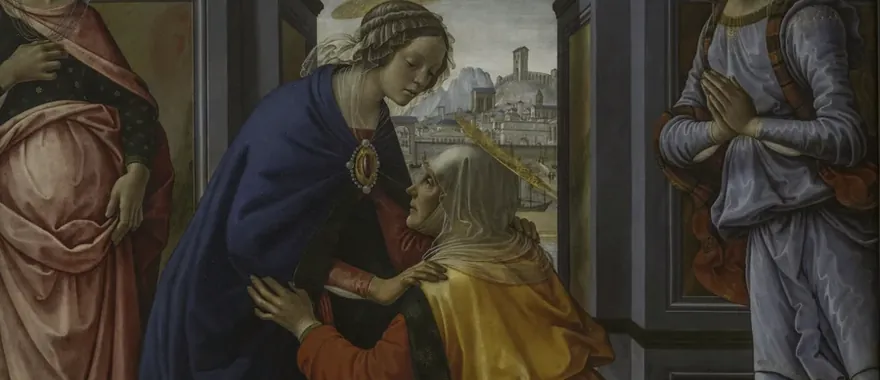
Rosary
 Top