In Nazareth, the most important dialogue in the history of the cosmos takes place. Eve in Paradise spoke with the fallen angel and brought death; Mary speaks with the Archangel and brings Life. Her "Fiat" (Let it be done to me) is the perfect reversal of the rebellion of "Non serviam." At the moment of the Annunciation, Mary becomes the living tabernacle – the Glory of the Lord (Shekinah), which once filled the Temple in Jerusalem, now dwells within her. The Word becomes Flesh, and human nature is inextricably united with the Divine.
Our Father…
We recite the Hail Mary 10 times.
Hail Mary… Glory be to the Father… O my Jesus…
Mary sets out for the Judean mountains as the new Ark of the Covenant. In the Old Testament, King David danced for joy before the Ark of the Lord; Now John the Baptist, the last prophet of the Old Covenant, "leaps for joy" in Elizabeth's womb before the true Lord. This is the meeting of two Testaments. Mary sings the Magnificat—the song of God's poor (Anawim), announcing the revolution of grace, in which pride is cast down from its throne and humility exalted. This is the first procession with the Blessed Sacrament in history.
Bethlehem in Hebrew means "House of Bread." It is no coincidence that Jesus is born in this city and laid in a manger—a feeding place for animals. From his birth, he reveals himself as "the living Bread that came down from heaven," food for the world. God reveals himself not in the power of thunder, as on Sinai, but in the defenselessness of an infant (kenosis—emptying). In this mystery, Infinity can be touched, and Light shines in the darkness of human history, accessible to simple shepherds and the truth-seeking Magi.
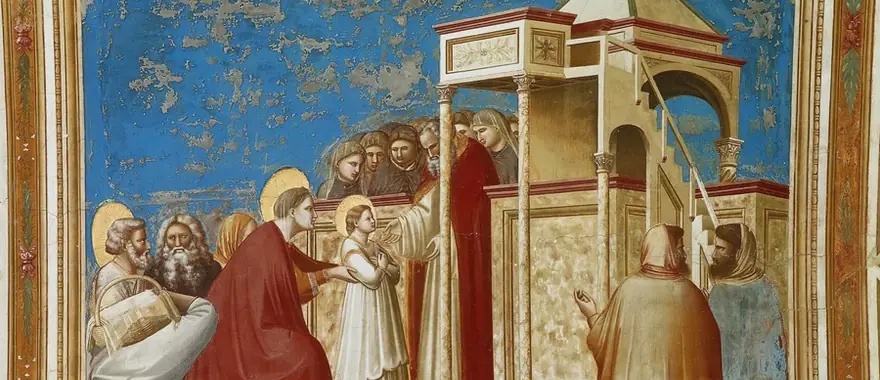
The prophet Malachi foretold: "Suddenly the Lord will come to his temple." This prophecy is fulfilled when Mary carries Jesus. Here, the Law (symbolized by the temple) and Grace (Jesus) meet. The offering is an act of acknowledging that every firstborn belongs to God, which alludes to the Exodus from Egypt. However, Simeon sees deeper – he announces that this Childlike Savior will be a "sign of contradiction," and a sword will pierce the Mother's soul. The joy of offering is intertwined here with the shadow of the Cross – the sacrifice on Golgotha is announced in the temple liturgy.
The twelve-year-old Jesus reveals for the first time his awareness of divine Sonship: "Did you not know that I must be about my Father's business?" Jesus's three-day disappearance foreshadows the Easter Triduum—His death and disappearance into the tomb before the Resurrection. Mary, by holding these things close to her heart, teaches us faith in moments of darkness and God's apparent absence. Jesus, as Incarnate Wisdom, teaches in the Temple, pointing out that earthly family ties must give way to absolute obedience to the Heavenly Father.
 Top